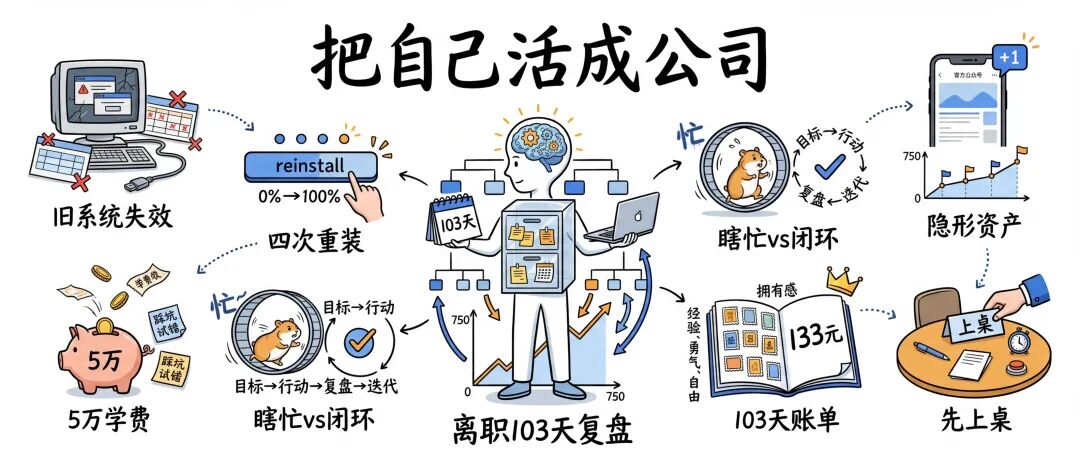
"A Note Before We Begin: Since WeChat Official Accounts cannot send direct messages, and I can't thank each of you who followed individually, this article is also a thank-you note. Thank you all for your support. Since Group 1 is full, you can send a message in the official account backend, and it will automatically send the group invitation QR code."
Today, scrolling through my phone's countdown, I realized it's been over 100 days since I quit my job.
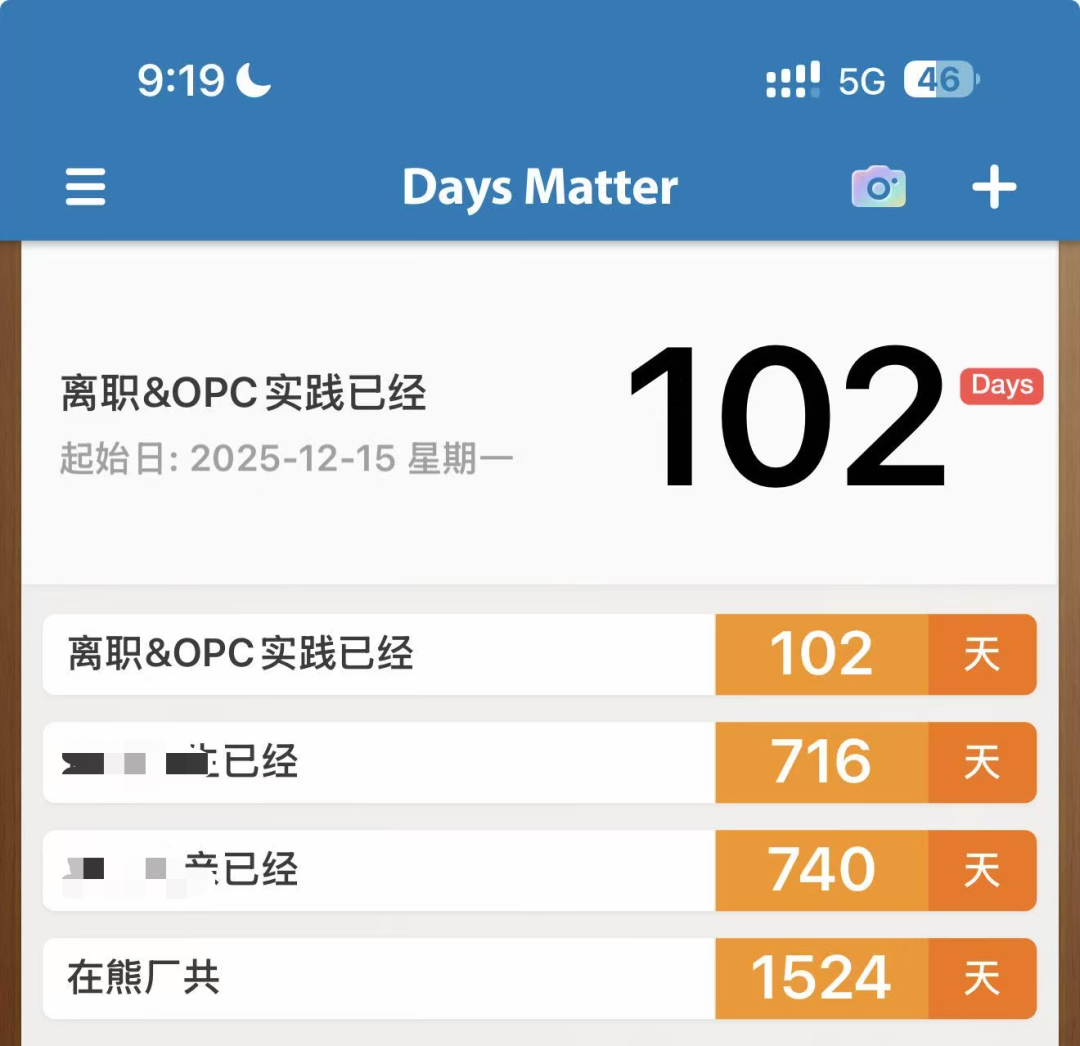
Time really does fly! Thinking back to going back and forth with clients over some damn BUG feels like it happened just yesterday.
Looking back at these hundred days since leaving, honestly, I've learned more than I did in the past 10 years of working. Although I've left the job, I'm still in work mode every day—even busier than when I was employed. Some might ask, "For what?"... 🤔 Survival! Proof!
While I've learned a lot these hundred days, I haven't gotten any smarter. I know what I am deep down—crystal clear—so I can only describe myself as "diligence makes up for lack of talent"... I think the biggest change is swapping "thinking" for "doing"—and then getting harshly educated by reality, round after round.
This article isn't some success story; it's just a rough review of my experience over these hundred days, because the revolution is far from over—comrades must keep striving! And this is also a real "pitfall diary": what pits I stepped in, what things I figured out, what invisible assets I've accumulated. It's also an OKR Review of my hundred days!

If you're also wondering whether to take that step, or have already taken it and are feeling lost—this is for you too! As the cold wave hits, we need to huddle together for warmth even more.
01 Four Mindset Shifts: Things I Only Truly Learned After Quitting
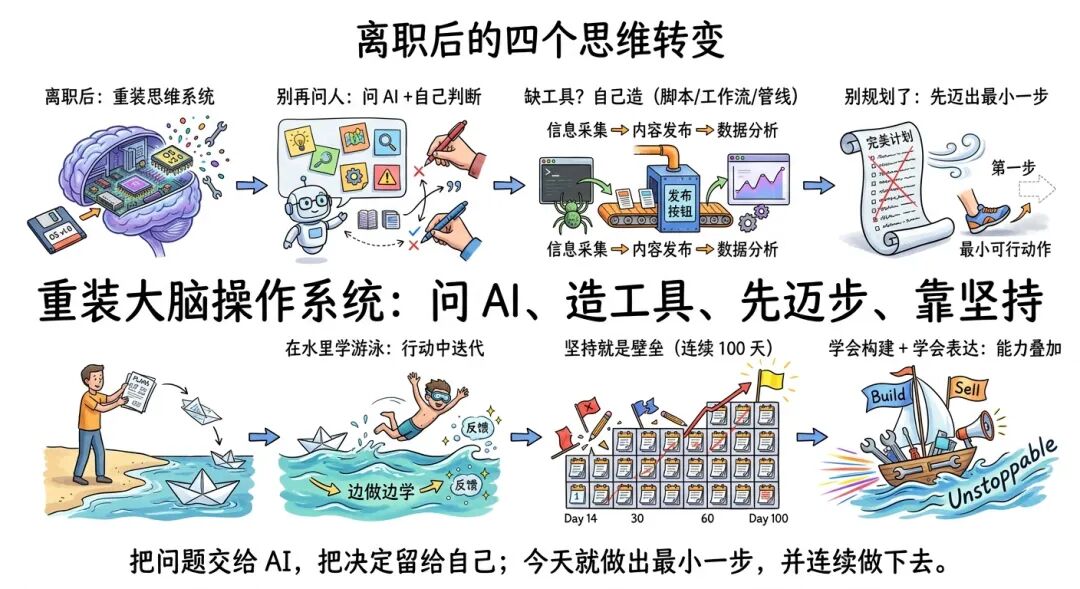
Before quitting, I thought the hardest part would be "no income." After quitting, I discovered the hardest part is that operating system in your brain that's been running for over a decade—it all needs to be reinstalled.
First shift: I stopped "asking people" and learned to "ask AI + judge for myself".
When I encountered problems at work, my first instinct was to find someone experienced—ask my manager, ask colleagues, ask experts, ask seniors. That's not learning; that's dependence. After quitting, I discovered: throw the question to AI, get 5 directions, then cross-verify by looking up materials myself—this process is truly "growing a brain."
Also, I found in the WeChat groups I created that many colleagues (sorry, old work habit calling coworkers "colleagues") love asking questions in the group. Actually, these questions and operation methods can now be directly asked to AI: because it can do far more than give a simple reply—it can help you think of solutions, help you verify, and even directly generate the capabilities you want!
"Learn to sell, learn to build. If you can do both, you will be unstoppable."
—— Naval Ravikant, How to Get Rich (Without Getting Lucky) (source)
Second shift: Missing a tool? Build it yourself.
I used to think "I'm not a programmer, I can't do this." Now? Information gathering scripts, content publishing workflows, data analysis pipelines—all built by myself. Not because I suddenly learned to code, but because AI lowered the barrier of "building tools" from three months to two or three days. All you do is keep prompting it, then collect the homework.
One addition: PUA/scolding it—according to feedback from professionals, this actually gets better responses.
Third shift: Stop planning, just start.
I once spent two weeks writing a "perfect plan"—from market research to product roadmap, from tech stack selection to business model. The Excel spreadsheet had over a dozen tabs; I even calculated projected revenue for the third month. Result? Completely scrapped on day one of execution.
It's not that the plan was bad; it's that you simply don't know what you don't know. The "user needs" you imagine sitting at home are completely different from actual user reactions after you build something. Two weeks of planning wasn't as valuable as spending two days making the ugliest prototype and sending it out to see if anyone cares.
Even worse, planning gives you the illusion of "doing something". Opening Notion to organize templates, drawing mind maps, listing TODOs, making competitive analysis charts—busy all day, feeling super productive. But looking back: not a line of code written, not an article published, not a single user contacted. Classic case of losing money while gaining applause—spent tons of time, zero output.
I was stuck in this trap for a while: researching tool combinations during the day, organizing notes and writing "methodologies" at night, feeling like I learned so much after a week. But if you asked me "what did you make this week that you can show others?"—the answer was nothing.
Later, through daily WeChat Official Account updates, I discovered: as long as you're willing to take your smallest step, finish it, then see where the next step is.
Even if the first article is terrible, publishing it is better than leaving it in drafts.
Even if the first script runs ugly, getting results is better than drawing architecture diagrams.
You can never learn to swim on shore—you have to jump in first, swallow some water, then figure out which direction to swim.
Fourth shift: Persistence itself is a barrier.
This is both the simplest and the hardest.
These 103 days, I updated my Official Account every single day, without missing one. Including those days during the New Year, days when I was sick and uncomfortable, days when I was stuck at 2 AM unable to think of a topic—never broke the streak.
Why die-hard about this? Because I've personally witnessed too many people's trajectories: Day 7, thinking "seems like no feedback," starting to waver; Day 14, thinking "maybe the direction is wrong," starting to hesitate; Day 30, thinking "others are doing better than me," starting to get anxious; Day 60, thinking "maybe I should pause and think it through"—and then never coming back.
Persistence isn't because I'm more disciplined than others; it's because I understood something: early-stage accumulation has delayed returns. The article you write today might have no readers, but two months later someone finds it, shares it, and it starts working for you. Content is a compound interest asset, but compound interest requires one premise—you must keep depositing principal.
Of course, there's an even harsher reality: most people aren't defeated by competitors; they're eliminated by their own giving up. You don't need to be better than everyone; you just need to persist one month longer than most people. When you look back, you'll find: 80% of those who started at the same time as you are already gone.
As long as you're still here, you've already beaten most people.
Of course, regarding feelings after quitting, I've written several pieces in previous Official Account posts. Please enjoy:
Only After Quitting Did I Truly Discover AI Is Impacting Our Fixed Thinking
Post-Resignation Reflections <3/3>: Finding Hope in Darkness—Where Is Hope
02 Real Tuition Paid: The Knowledge I Bought for 50,000 Yuan
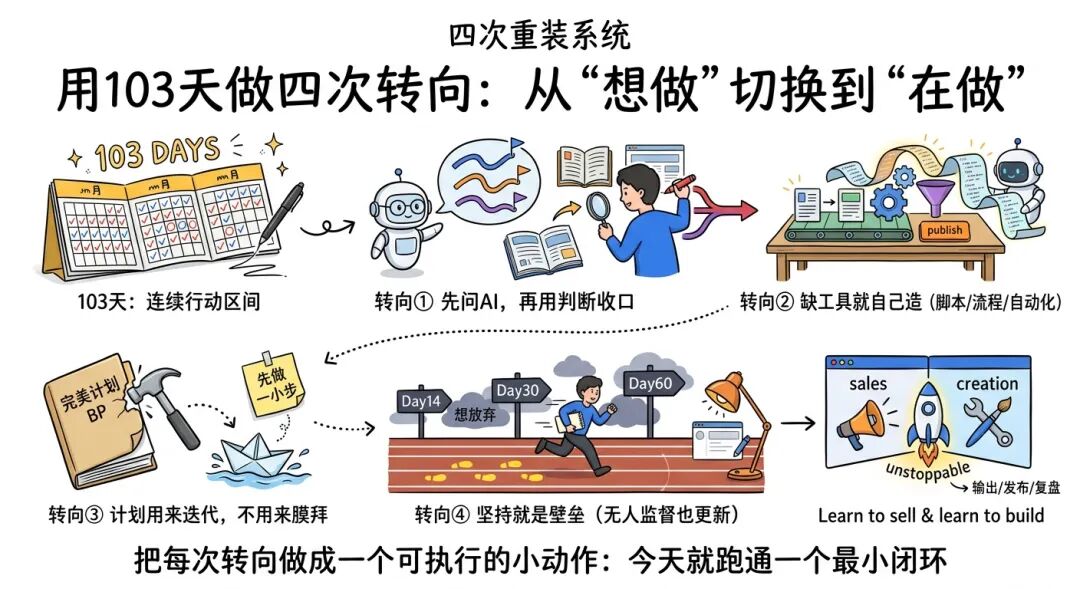
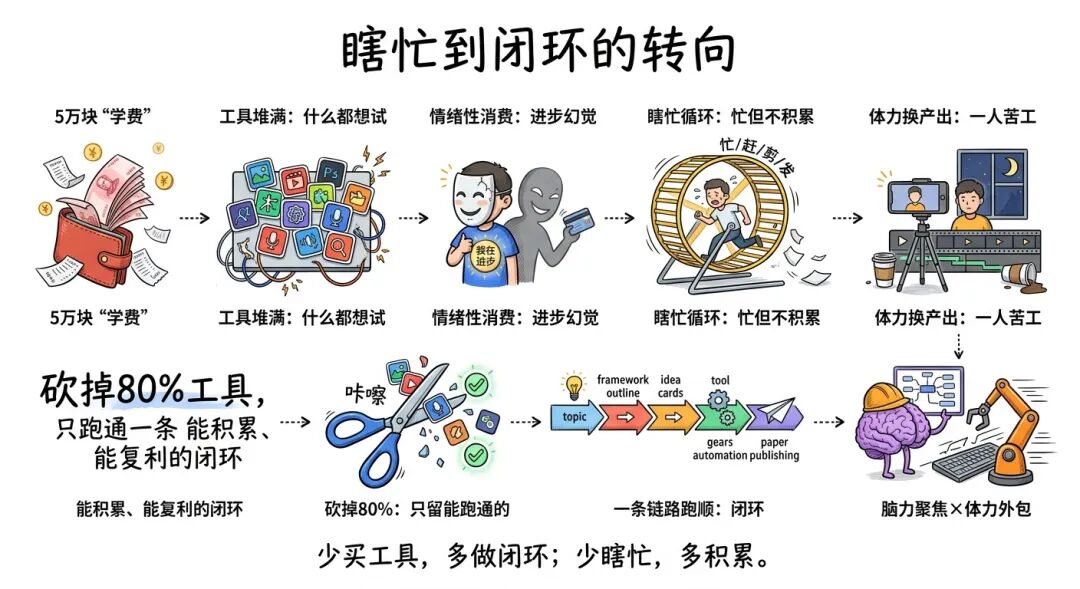
This might hurt to say: in 100 days since quitting, I burned nearly 50,000 RMB on various AI tools, servers, APIs, and subscriptions. What did this money buy?
What did this money buy? 11 directions, 33 tools—I've touched nearly every corner of the AI ecosystem:
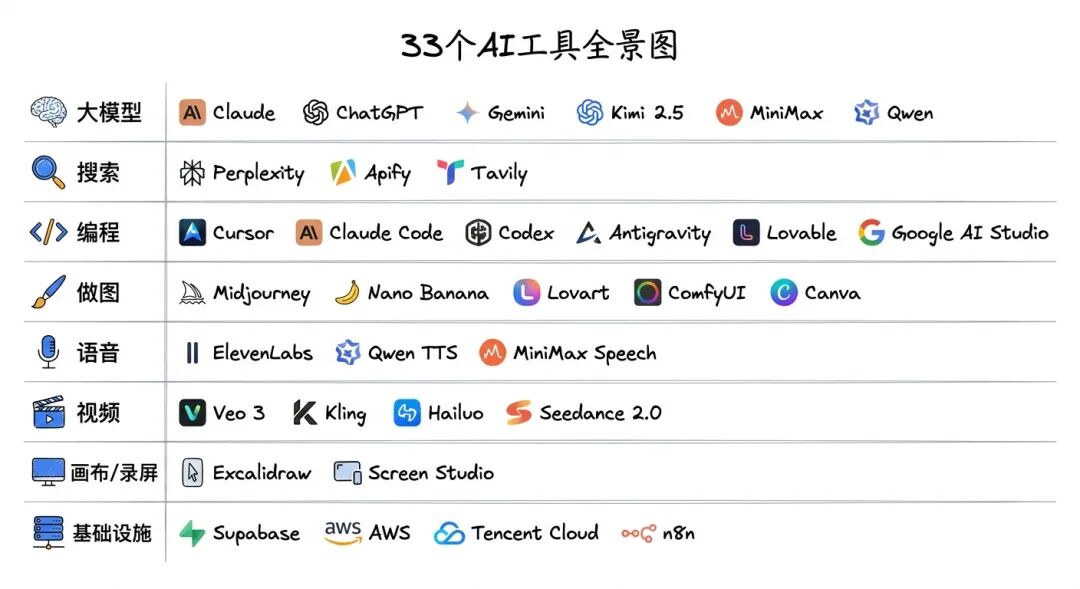
Large Models: Claude (coding) · ChatGPT (articles) · Gemini (casual use) · Kimi 2.5 · MiniMax (voice over Qianwen) · Qwen
Search & Data: Perplexity (main) · Apify (money burner) · Tavily
Coding Tools: Claude Code (main) · Cursor · Codex · Antigravity · Lovable · Google AI Studio
AI Image Generation: Nano Banana (main) · Lovart · ComfyUI · Canva · Midjourney
Voice Synthesis: ElevenLabs · Qwen TTS · MiniMax Speech (main)
Video Synthesis: Fal.ai (Veo 3 · Kling · Hailuo) · Seedance 2.0
Canvas & Screen Recording: Excalidraw · Screen Studio
Infrastructure: Supabase (database) · Tencent Cloud · AWS · n8n (workflow) · the-tool-we-can't-name · HeyGen (digital human)
"If you're not embarrassed by the first version of your product, you've launched too late."
—— Reid Hoffman, LinkedIn co-founder (source)
However, the biggest lesson is: trying everything at first, I ended up mastering nothing. The real turning point was when I cut 80% of the tools and kept only the few main ones that could actually complete the loop.
Of course, friends who know me might know that right after quitting, I tried shooting videos myself—back then my routine was:
Morning: think of content → Afternoon: shoot material → Evening: edit and publish.
After doing this for a while, I realized: this is completely exchanging physical labor for output, no different from working a job—completely deviating from the "one-person company" intent. Cut it immediately, pivoted to using AI for content leverage.
Stepping in pits isn't scary; what's scary is stepping in pits and not daring to turn around.
03 From 0 to 750: How an "Unpromising" Official Account Survived
When I first started the Official Account, almost everyone around me said: Stop it, the Official Account bonus period is long gone.
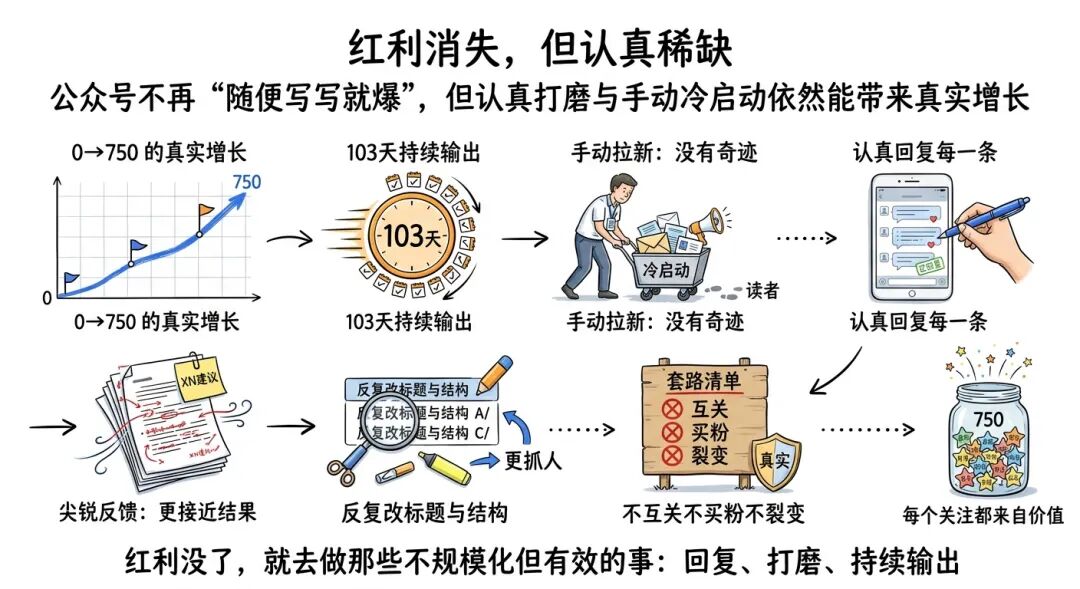
Were they right? From a data perspective, it's definitely not 2018 anymore. But they overlooked one thing: what disappeared was the era of "posting anything and going viral," not the era of "working hard and nobody watching."
103 days, Official Account followers went from 0 to 750.
This number wouldn't make any "follower growth guide." But for me, every follower is real: they read my articles, found them valuable, and clicked follow. No mutual follows, no bought followers, no viral tricks.
And I especially want to thank one person—my childhood friend WXN. When I just started, he wrote me very specific, very detailed suggestions. Not the perfunctory "you can do it" kind, but truly analyzing what was wrong with my content point by point and how to fix it. Although I haven't adopted them yet, hehe, they've given me a fairly clear direction for future content adjustments. Still, thank you 🙏
Of course, I also want to thank everyone in my real life who follows me. Without your suggestions, I wouldn't have made it to today! And the first two people who tipped: Brother Tou, Brother Hao.
"Actually startups take off because the founders make them take off... Nearly all startups have to recruit users manually."
—— Paul Graham, Y Combinator founder, Do Things That Don't Scale (source)
Even more importantly, I absolutely must thank all the friends who joined the groups. (Today I found Group 1 is full, Group 2 is now open.) Having a group of people willing to gather and discuss AI, one-person companies, future possibilities—this means more to me than any data: I'm on the right path.
WeChat Group 1 FullWeChat Group 2 Continuously Growing
This group—same thing I always say: In the AI era: absolutely no courses: because AI can help you with everything now. Learning costs have dropped to the minimum. What we're competing on is divergent thinking and integrative thinking, not learning ability. I hope to make it into a community, a system, where everyone can—or in the future ADot Community:
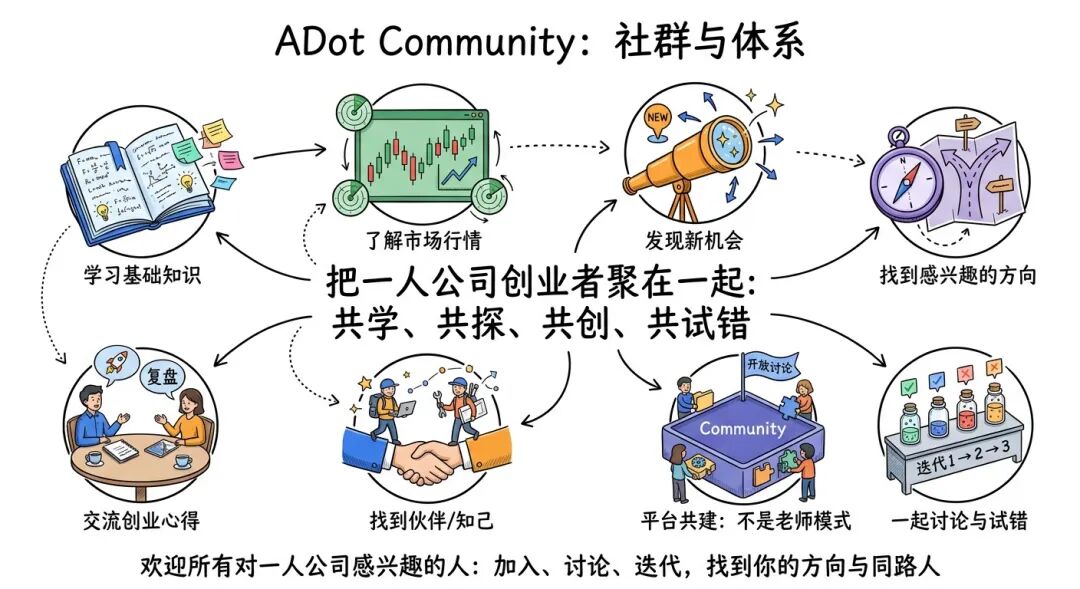
Learn foundational knowledge
Understand market conditions
Discover new opportunities
Find directions you're interested in
Exchange entrepreneurial insights
Find companions on the side-hustle or one-person company entrepreneurial journey! Kindred spirits! That special someone!
04 Invisible Assets: Things That Haven't Monetized Yet But Are Accumulating
Besides the "visible" achievement of follower count, there are "invisible" assets accumulating:
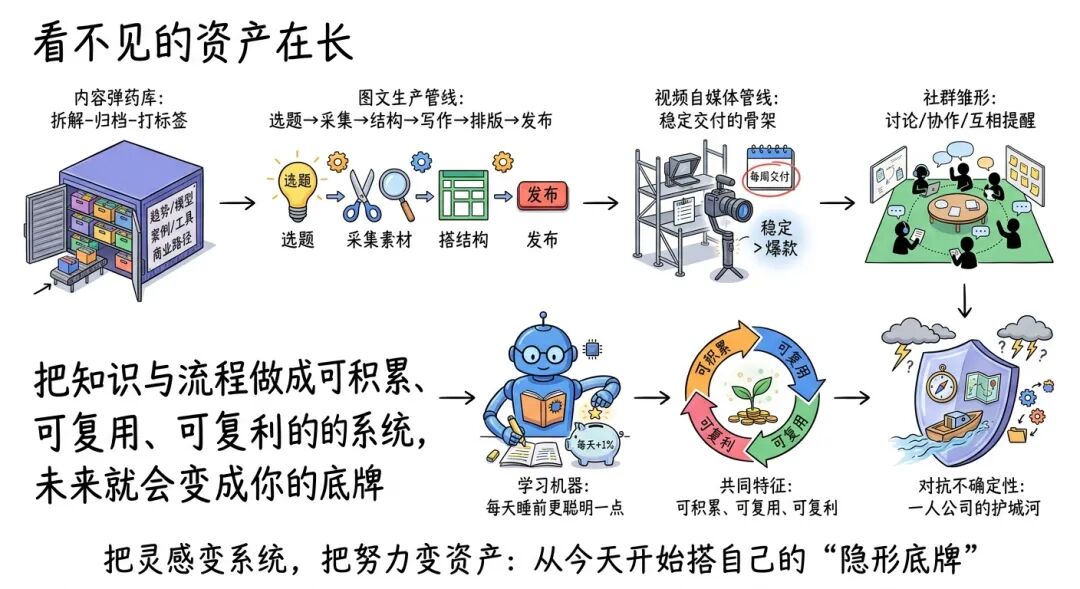
Video content library. I've organized a massive amount of video content from top industry figures, forming my own knowledge base. Still considering whether to open it up and how. This data is my "ammunition depot" for judging trends and writing content.
Text and image production pipeline. From topic selection, gathering, writing to publishing—it's nearly finalized. Efficiency has improved more than 10x compared to 100 days ago. Next, I'll expand to more platforms.
Video self-media pipeline. Currently researching and building it out, already have a rough framework, still fine-tuning details.
ADot Community. This community has launched. Its greatest value isn't "me being the teacher," but becoming a platform—welcoming everyone interested in one-person companies (OPC) to join, discuss, and fail together.
"I constantly see people rise in life who are not the smartest, sometimes not even the most diligent, but they are learning machines. They go to bed every night a little wiser than they were when they got up."
—— Charlie Munger, Vice Chairman of Berkshire Hathaway (source)
05 The 103-Day Bill: 144 Yuan vs. Priceless Experience
Here's a real number that's almost funny:
103 days since quitting, my "income" is—144 RMB.
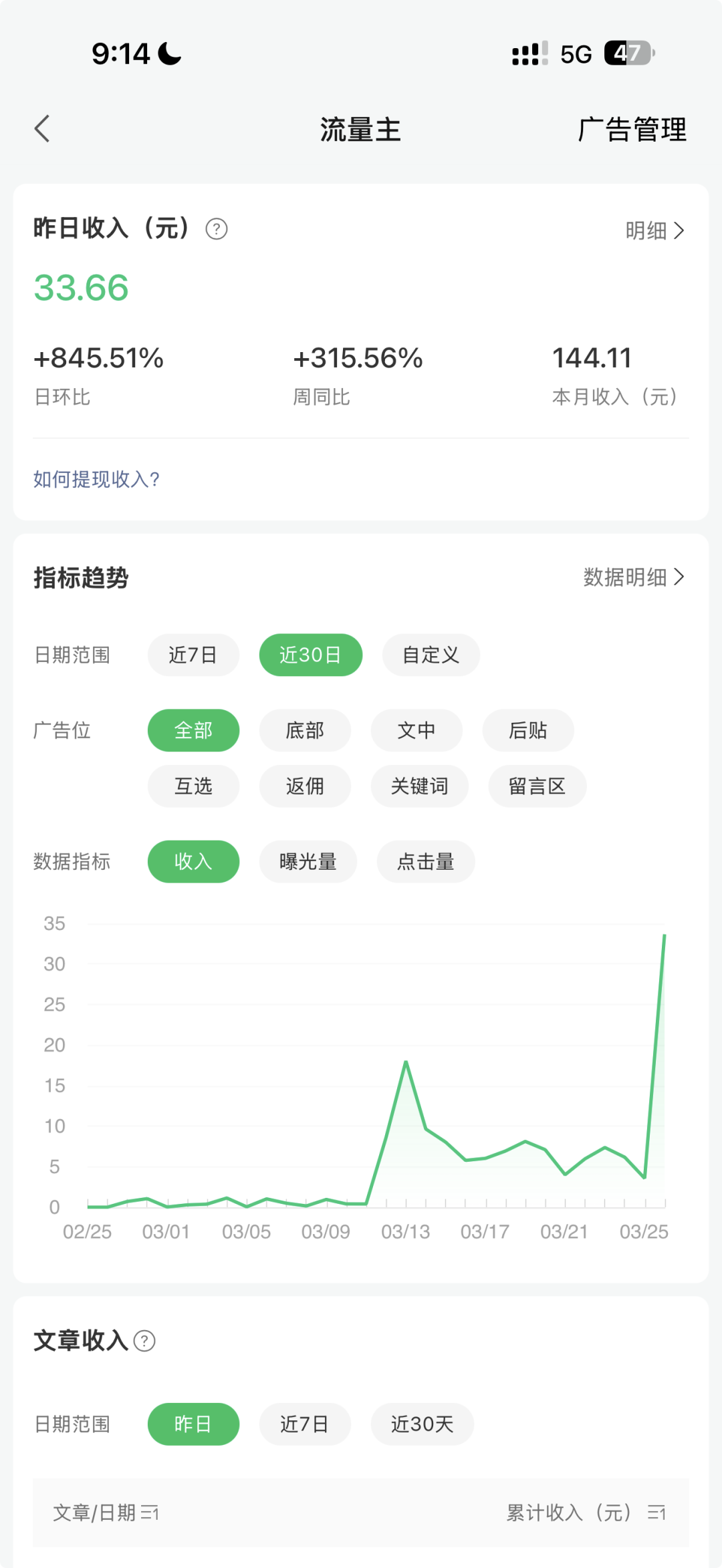
For friends still working, 103 days is roughly 3 months' salary deposited. On my end, 144 yuan—less than recycling scrap would earn 😭.
But I don't regret it one bit.
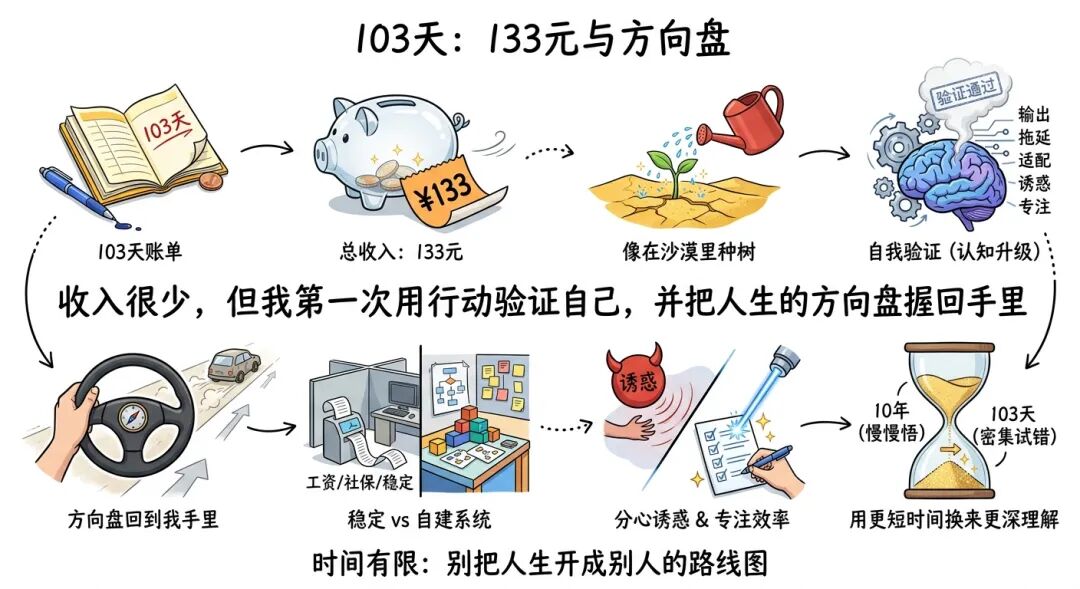
Because what I got in these 103 days can't be measured in money: I learned what I can do, what I can't do, what to persist in, what to let go. If I had to accumulate this knowledge while working, it might take another 10 years.
And I gained all of you—everyone willing to read my articles, join my groups, give me suggestions, and explore together.
"Your time is limited, so don't waste it living someone else's life."
—— Steve Jobs, Apple co-founder, 2005 Stanford University commencement speech (source)
06 In Closing: To You Who Are Also on the Journey
If you're hesitating about whether to leave your comfort zone, I don't have a standard answer for you.
But I can tell you three things I learned:
1. Don't wait until you're "ready" to start. You'll never be ready. Start first, adjust along the way.
2. Don't listen to too many people's opinions. 90% of people will tell you "don't take risks" because they don't dare. Truly valuable advice comes from people who've "done it."
3. Spend time on "accumulable" things. Scrolling short videos isn't accumulable; writing articles is. Doing gigs isn't accumulable; building systems is. Compound effects take time, but once they kick in, they're faster than you imagine.
"Every great business is built around a secret that's hidden from the outside. A great company is a conspiracy to change the world."
—— Peter Thiel, PayPal co-founder, Zero to One (source)
103 days is just the beginning.
For the next 100 days, I'll continue here, recording every step.
Thank you to everyone who read this far. See you in the group.